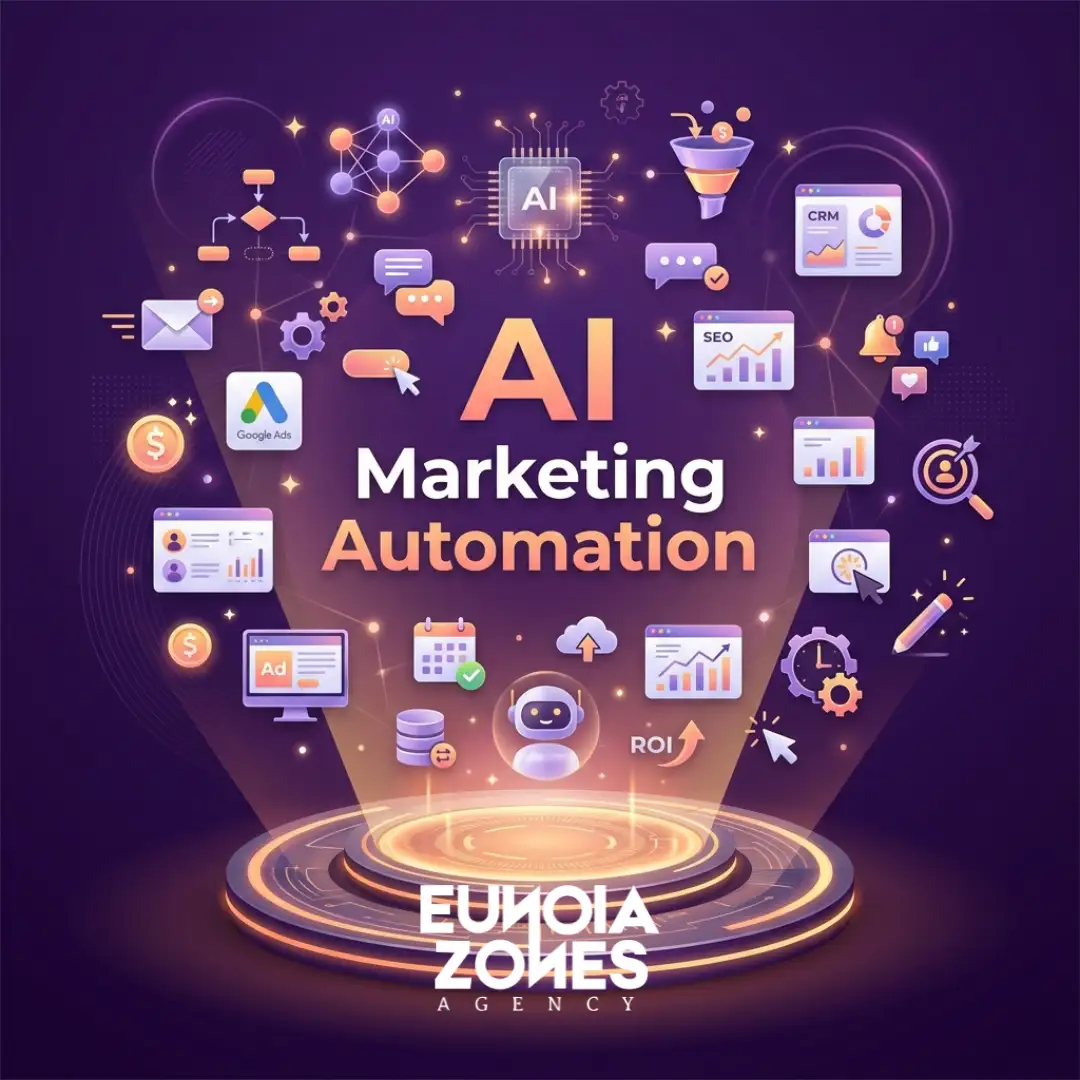
In the fast-paced digital ecosystem, the primary constraint on business growth is no longer a lack of ideas, but a lack of operational bandwidth. Traditional marketing automation systems offered a partial solution, but they relied on rigid, manual rule configurations that quickly broke down under changing market conditions. Today, the integration of Artificial Intelligence has transformed these systems into flexible, cognitive pipelines that handle complex execution on their own.
The Synergy of AI and Marketing Automation
Traditional automation was purely mechanical—it executed pre-programmed instructions like an automated assembly line. When you inject AI into this workflow, the system gains a brain. Instead of simply sending an email because a user clicked a link, an AI-powered automation system analyzes the user’s real-time sentiment, historical behaviors, and current digital context. This shifts your operational infrastructure from a static, rule-based system to an autonomous, self-optimizing engine that scales easily.
Automating Lead Generation and Nurturing with AI
The traditional lead funnel is notoriously leaky, often requiring manual sorting and constant human monitoring. AI automates the entire process with surgical precision:
- Predictive Lead Scoring: Instead of manually guessing which leads are valuable, machine learning models analyze historical data to score incoming leads based on their actual probability of conversion.
- Dynamic Lead Nurturing: AI automatically customizes the nurturing path for each prospect. If a lead shows intense interest in pricing pages, the system skips generic educational materials and instantly triggers an automated case study drop or a prompt to book a sales call.
Read our complete guide Best AI Tools for Content Creation and Digital Marketing in Egypt
AI-Powered Email Marketing and Personalization
Email marketing remains a highly profitable channel, but broad, generic blasts no longer work. AI brings hyper-personalization to email marketing workflows at an individual scale:
- Algorithmic Send-Time Optimization: Instead of scheduling a newsletter at a fixed time for an entire list, AI analyzes historical open patterns to send the email to each subscriber at the exact minute they are most likely to check their inbox.
- Dynamic Content Injection: Advanced email platforms use AI to alter subject lines, product recommendations, and copy blocks inside the email template on the fly, matching the specific preferences of the individual recipient.
Optimizing Ad Campaigns via Automated Bidding and Targeting
Managing paid advertising across Google, Meta, and LinkedIn used to require dozens of hours of manual adjustments every week. AI has completely automated ad performance tuning:
- Predictive Programmatic Bidding: AI algorithms analyze shifting market rates, audience traffic patterns, and ad performance metrics to adjust your ad bids every millisecond, making sure your ad budget is never wasted on low-intent clicks.
- Autonomous Creative Testing: Marketers can upload multiple hooks, images, and descriptions, and let the AI system mix, match, and test thousands of variants automatically, scaling the winning combinations instantly.
Discover more insights on this topic How AI Chatbots Improve Customer Experience for Egyptian Businesses
Streamlining Social Media Management with AI Tools
Social media demands constant presence and rapid trend adoption. AI tools act as autonomous social media managers, handling time-consuming production tasks:
- Intelligent Social Listening & Scheduling: AI monitors social platforms to spot relevant industry trends, draft contextual social posts in your brand voice, and schedule them for optimal engagement times.
- Automated Visual Repurposing: Advanced tools can automatically ingest a single long-form piece of content (like a webinar or podcast) and chop it into multiple short-form, captioned video clips optimized for different social channels.
Get more insights on this topic How Egyptian Businesses Can Use AI to Generate More Leads and Sales
Measuring the ROI of AI-Driven Marketing Automation
The ultimate test of any automated infrastructure is its impact on the bottom line. Tracking the financial performance of AI automation requires looking at three core metrics:
- Customer Acquisition Cost (CAC): Traditional automation often suffers from high acquisition costs due to manual targeting errors and wasted ad spend. AI drastically lowers CAC by using predictive modeling to target only the highest-intent audiences.
- Team Production Hours: Instead of spending 20 to 30 hours per week on manual data entry, workflow setup, and campaign adjustments, your marketing team reduces their operational tasks to just 2 to 3 hours of strategic oversight and prompt engineering.
- Lead Conversion Rates: Traditional funnel setups suffer from high drop-off rates due to static email sequences. AI multiplies conversion rates by serving the exact piece of content or social proof the user needs at their specific stage of the buyer's journey.
- The Automation Manifesto: Marketing automation with AI is not about replacing human creativity; it is about building the infrastructure that sets it free. By offloading data analysis, bidding, and content distribution to self-optimizing machines, you give your team the time to focus on what matters most: strategy, storytelling, and building real human connections.
Explore our detailed guide The Future of AI Marketing for Businesses in Egypt in 2026