
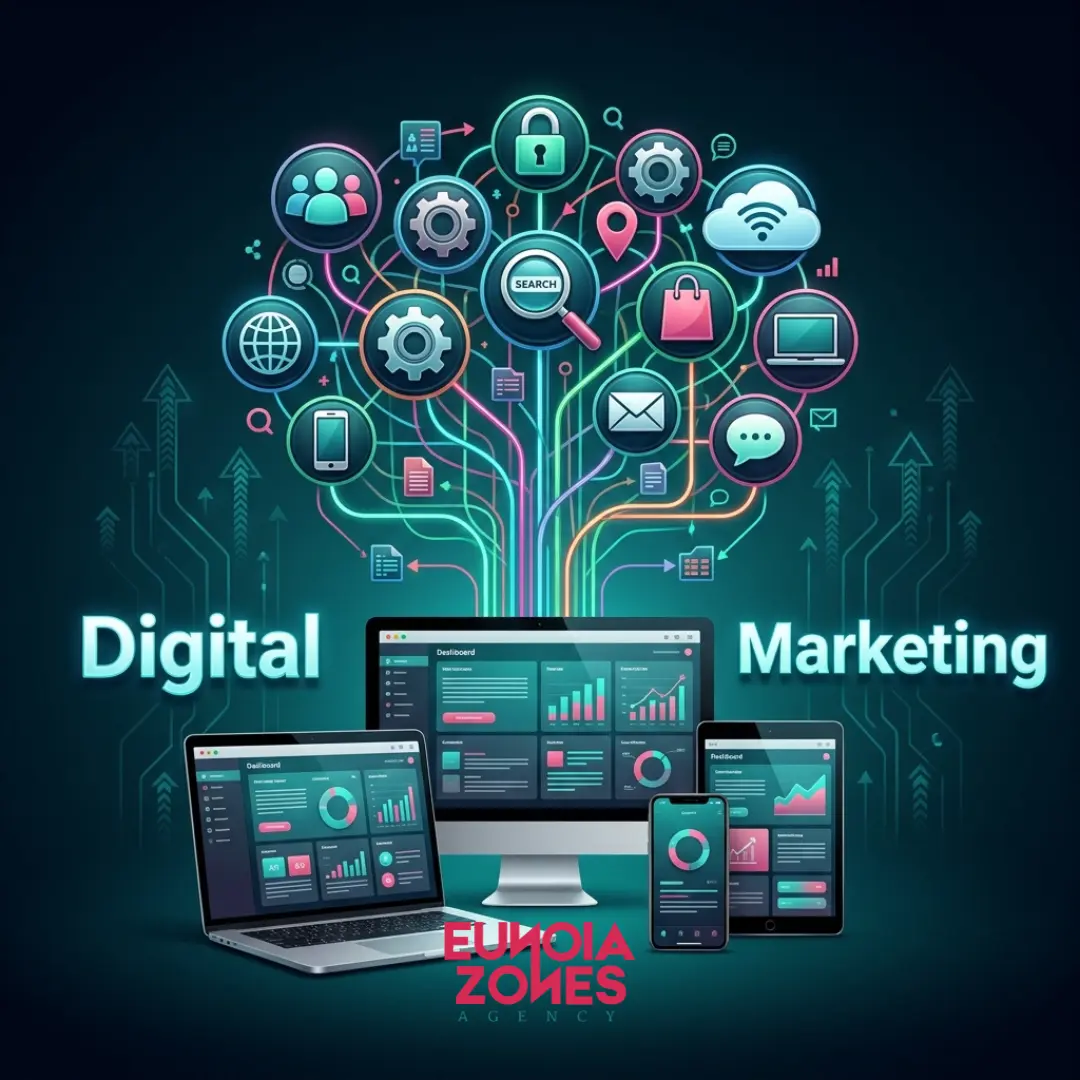
Digital marketing has become essential for small businesses that want to survive and grow in a highly competitive environment. In 2026, most customers discover products and services online before making any purchase decision. This shift means that having a strong digital presence is no longer optional, but a core requirement for success. A well-designed strategy helps small businesses reach the right audience, build trust, and increase sales in a cost-effective way.
Building a Successful Digital Marketing Strategy for Small Businesses
A successful digital marketing strategy for small businesses starts with understanding your audience and choosing the right channels to reach them. It’s not about being everywhere, but about focusing on the platforms that deliver the highest impact. By combining clear goals, consistent content, and data-driven decisions, small businesses can compete effectively and achieve sustainable growth online.
Setting Clear and Realistic Goals
Every successful digital marketing strategy starts with clear objectives. Without defined goals, marketing efforts often become scattered and ineffective. Small businesses need to determine exactly what they want to achieve, whether it is increasing website traffic, generating leads, improving brand awareness, or boosting online sales. These goals should be measurable and realistic so that progress can be tracked over time. When goals are properly set, they provide direction and help businesses allocate their resources more efficiently.
Understanding the Target Audience
One of the most important steps in building a digital strategy is understanding the target audience. Businesses must know who their customers are, what they need, and how they behave online. This includes analyzing demographics, interests, and purchasing habits. By developing detailed customer profiles, businesses can create more personalized marketing messages. When content speaks directly to the needs of the audience, engagement and conversion rates increase significantly.
Content Marketing as the Foundation
Content marketing plays a central role in any digital strategy because it builds trust and strengthens brand identity. Small businesses should focus on creating valuable and relevant content that solves customer problems or answers their questions. This can include blog articles, videos, social media posts, and infographics. In 2026, short-form videos and interactive content are especially powerful, as they capture attention quickly and encourage sharing. Consistent and high-quality content helps businesses stay visible and competitive.
SEO and Online Visibility
Search Engine Optimization (SEO) is crucial for ensuring that a business appears in search results when potential customers are looking for related products or services. A strong SEO strategy involves using relevant keywords, optimizing website structure, improving loading speed, and ensuring mobile compatibility. When a website ranks higher on search engines, it naturally attracts more organic traffic. This reduces dependency on paid advertising and provides long-term visibility for small businesses.
Social Media and Customer Engagement
Social media platforms are powerful tools for connecting directly with customers and building brand awareness. Platforms such as Facebook, Instagram, LinkedIn, and TikTok allow businesses to share updates, promote products, and engage with their audience in real time. Paid social media advertising also helps businesses reach specific target groups with precision. However, success on social media depends not only on promotion but also on interaction, consistency, and authenticity.
Data Analysis and Strategy Improvement
A strong digital marketing strategy must be supported by continuous data analysis. Businesses need to track key performance indicators such as website traffic, conversion rates, engagement levels, and return on investment. This data provides valuable insights into what is working and what needs improvement. By regularly reviewing performance, businesses can adjust their strategies and make smarter decisions that lead to better results over time.
Building a Sustainable Digital Future
In conclusion, creating a successful digital marketing strategy for small businesses in 2026 requires a balanced combination of planning, creativity, and analysis. Clear goals, audience understanding, strong content, SEO optimization, and active social media engagement all work together to build a strong online presence. When supported by continuous improvement and data-driven decisions, these elements help small businesses achieve sustainable growth and long-term success in the digital economy.
Don’t skip this: Top Digital Marketing Strategies for 2026