
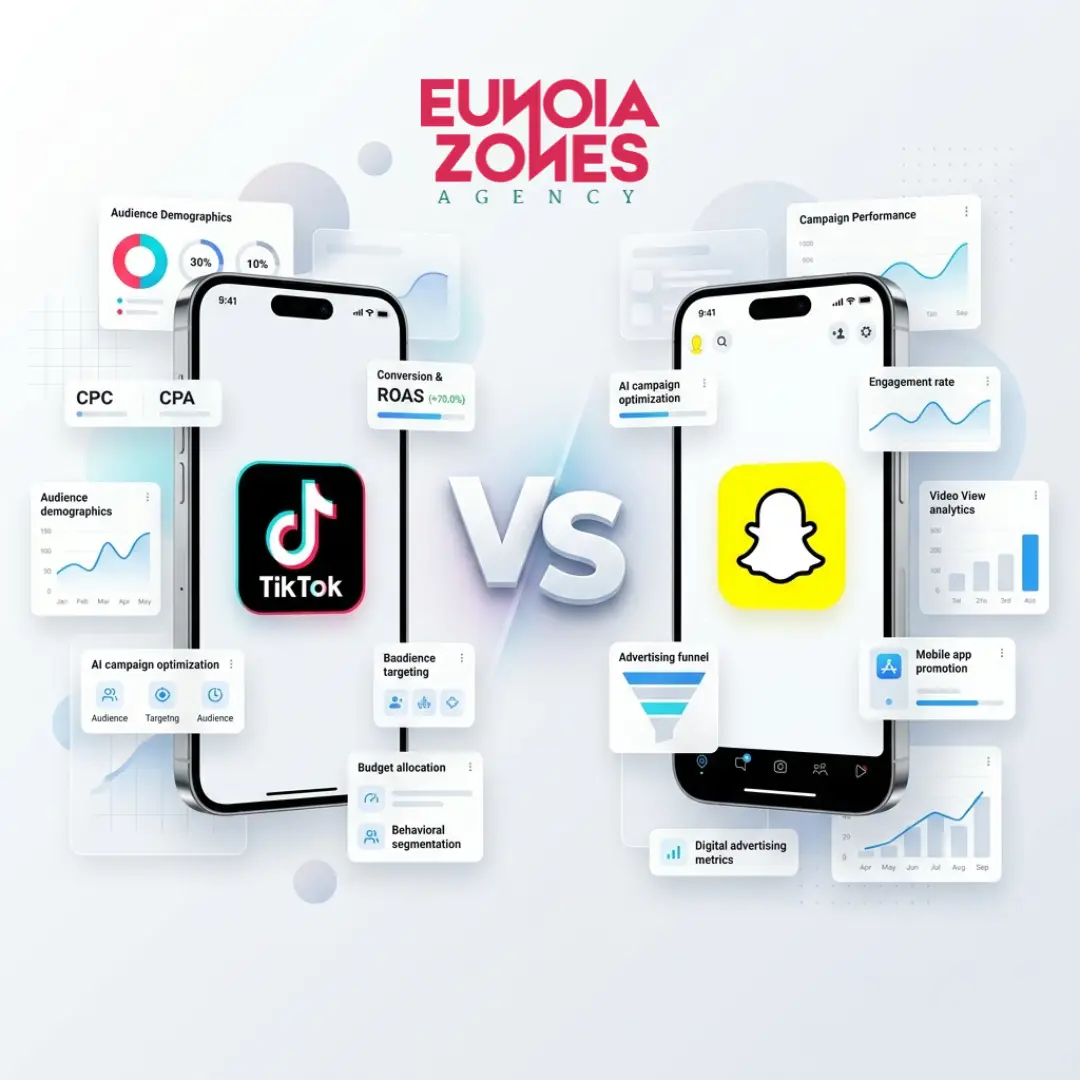
The short-form vertical video revolution has fundamentally changed how brands capture consumer attention. At the forefront of this shift are Snapchat and TikTok—two platforms that command massive engagement from younger demographics but offer distinctly different environments for advertisers. Choosing where to allocate your digital ad budget requires a deep understanding of how each platform operates, who uses them, and how their respective ad ecosystems drive business growth.
Understanding the Unique Audiences of Snapchat and TikTok
While both platforms capture the Gen Z and Millennial cohorts, their user behaviors and psychological mindsets differ sharply.
Snapchat is built around close friendships, direct communication, and real-life connections. Its audience uses the platform for private, authentic sharing, creating a high-trust environment. Advertisers on Snapchat reach a highly loyal user base that is often less active on traditional social networks.
TikTok, by contrast, is an entertainment and discovery engine driven by content, not social graphs. Its algorithm serves content based on user interests rather than who they follow. TikTok users are in an active state of discovery, constantly seeking entertainment, trends, and product recommendations, making them highly receptive to impulse purchases and viral trends.
Don’t miss this detailed guide: Your Complete Guide to Successful Digital Advertising Campaigns in Egypt
Ad Formats and Creative Best Practices for Each Platform
The phrase "Don't Make Ads. Make TikToks" perfectly encapsulates the creative demand of TikTok. Ads must blend seamlessly into the user’s organic For You Page (FYP). High-production videos often underperform compared to raw, user-generated content (UGC) shot on mobile phones. Top formats include In-Feed Ads, TopView (which captures immediate attention upon opening the app), and Branded Hashtag Challenges that drive massive community participation.
Snapchat requires a different creative lens, leaning heavily into utility and immersive experiences. While Single Image or Video Ads perform well in Stories and Spotlight, Snapchat’s crown jewel is its Augmented Reality (AR) Lenses. AR shopping allows users to virtually try on makeup, shoes, or glasses, transforming the ad from a passive viewing experience into an interactive tool. The rule of thumb for Snapchat is immediate impact, as users swipe through stories rapidly.
Campaign Objectives and Targeting Capabilities
Both platforms offer robust, full-funnel advertising solutions, yet their targeting strengths align with their platform architecture.
TikTok possesses an incredibly sophisticated interest and behavior targeting engine. Advertisers can target users based on the specific types of videos they interact with, the creators they follow, and even their e-commerce behaviors within the app. Its conversion tracking is highly optimized for fast-moving e-commerce brands looking to drive immediate sales.
Snapchat leverages powerful location-based targeting due to its native Map features, making it highly effective for brick-and-mortar retailers, local services, and entertainment venues. Furthermore, Snapchat offers advanced custom audience matching and pre-built lifestyle categories, allowing brands to target users based on real-world habits, purchasing patterns, and mobile app usage.
Measuring Ad Performance on Snapchat vs. TikTok
Tracking return on ad spend (ROAS) requires proper implementation of each platform's proprietary tracking tools: the TikTok Pixel and the Snapchat Pixel, alongside server-side APIs.
TikTok’s native analytics place a heavy emphasis on virality and engagement metrics, such as video watch time, retention rates, and sound usage, alongside standard conversion metrics.
Snapchat’s dashboard focuses deeply on direct-response efficiency, monitoring cost per acquisition (CPA), swipe-up rates, and unique reach. For AR campaigns, Snapchat introduces specialized metrics like share rate, camera play time, and active engagement time, giving advertisers deep insight into how consumers interact with their branded assets.
Don’t miss this detailed guide: How to Calculate Your Ad Campaign for Egyptian Businesses
Success Factors: What Works on Each Platform
Analyzing successful campaigns reveals that brands win on TikTok when they lean into cultural moments, leverage popular audio tracks, and collaborate with native creators. E-commerce and direct-to-consumer (DTC) brands frequently experience explosive growth on TikTok by sparking organic trends that drive users to clear out retail shelves.
Conversely, brands succeed on Snapchat when they focus on high-intent, friction-free experiences. Gamified AR filters, direct swipe-ups to app installs, and exclusive promotional codes shared within close-knit circles drive exceptional conversion rates, particularly for app developers, gaming companies, and lifestyle brands.
Deciding Where to Invest Your Short-Video Ad Budget
The decision of where to invest ultimately hinges on your specific business goals, product type, and creative resources.
If your product relies heavily on community validation, viral trends, storytelling, or creator partnerships, TikTok is the ideal marketplace. It is built to scale products rapidly through sheer entertainment value.
Don’t miss this detailed guide: Facebook and Instagram ads for lead generation in Egypt